
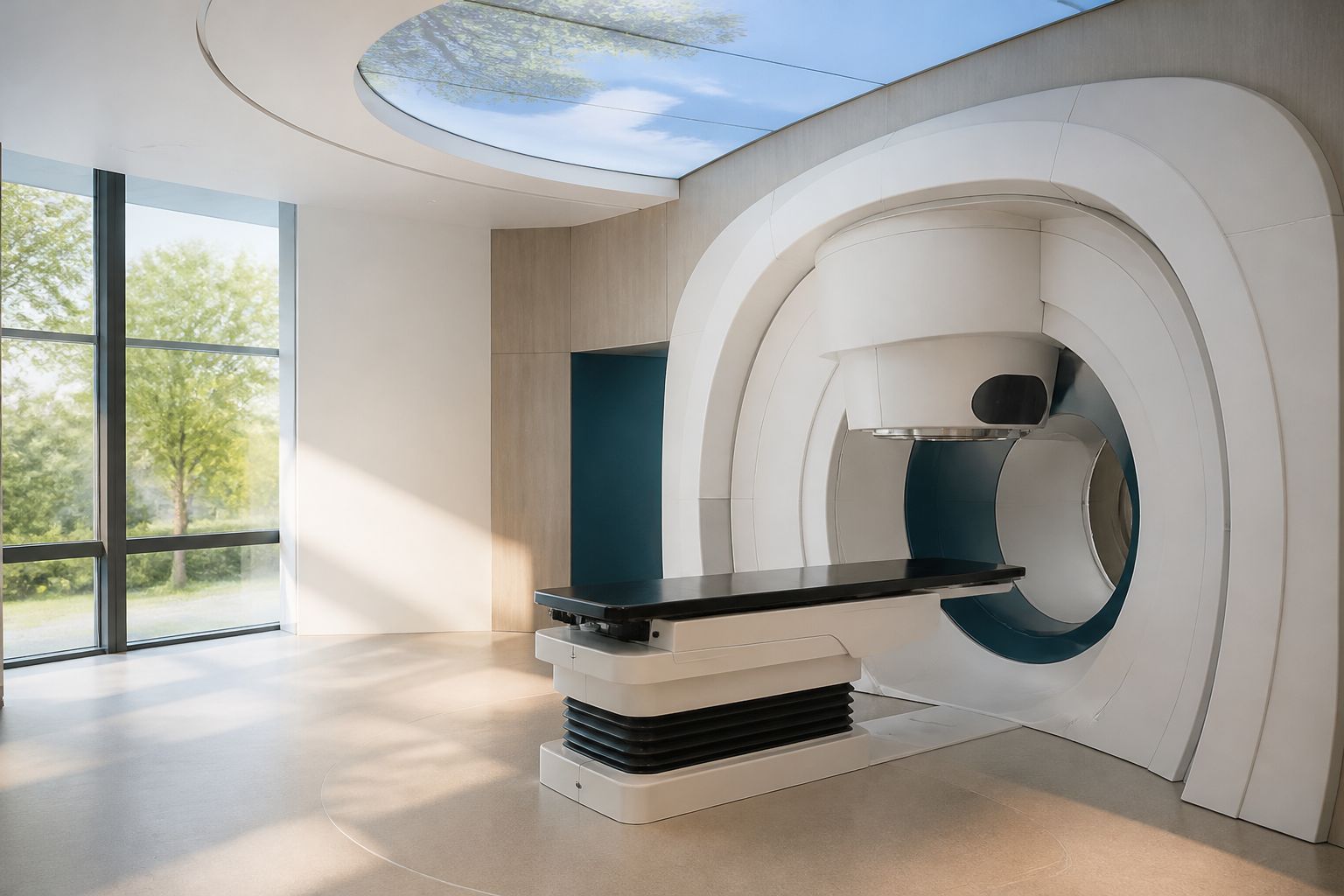
Proton therapy is a highly targeted form of radiation used to treat certain cancers. Costs can range from $15,000 in some countries to over $120,000 in others, depending on location, hospital, and what is included in the price. This guide compares proton therapy costs in the USA, Germany, India, and other countries, helping you understand what’s covered, what isn’t, and what to watch for when comparing international options.
What proton therapy involves
Proton therapy is a sophisticated and precise cancer treatment that uses protons, rather than traditional X-rays, to target malignant tumors. The unique physical properties of protons allow doctors to deposit the maximum radiation dose directly within the tumor, with minimal exit dose, thus sparing nearby healthy tissues and vital organs. This is particularly beneficial for tumors located close to critical structures such as the brain, spine, or eyes, and is often the preferred option for pediatric patients whose developing tissues are more sensitive to radiation.
The treatment process begins with a comprehensive consultation, during which the oncology team reviews your medical history and diagnostic results. Advanced imaging techniques, such as CT, MRI, or PET scans, are performed to accurately map the tumor’s size, shape, and location. A personalized treatment plan is then created by a multidisciplinary team, including radiation oncologists, physicists, and dosimetrists, to ensure optimal targeting and dose distribution.
Proton therapy is administered over several sessions, commonly referred to as fractions. Most patients receive daily treatments, five days a week, for a period ranging from one to eight weeks, depending on the cancer type and protocol. Each session is painless and lasts about 15–30 minutes, with additional time allocated for patient positioning and equipment calibration. The treatment is usually outpatient, allowing patients to return to their accommodation or home after each session. For those traveling from other regions or countries, staying nearby for the duration of therapy is often necessary, and some hospitals provide assistance with local logistics.
| Country | Typical cost range (USD) | What is usually included |
|---|---|---|
| USA | $90,000–$120,000 | Consultation, planning, imaging, all sessions, routine supervision |
| Germany | $55,000–$80,000 | Consultation, planning, imaging, all sessions, routine supervision |
| UK | $60,000–$100,000 | Consultation, planning, imaging, all sessions, routine supervision |
| Switzerland | $65,000–$110,000 | Consultation, planning, imaging, all sessions, routine supervision |
| France | $55,000–$85,000 | Consultation, planning, imaging, all sessions, routine supervision |
| Japan | $40,000–$60,000 | Consultation, planning, imaging, all sessions, routine supervision |
| South Korea | $45,000–$65,000 | Consultation, planning, imaging, all sessions, routine supervision |
| India | $15,000–$25,000 | Consultation, planning, imaging, all sessions, routine supervision |
| China | $25,000–$45,000 | Consultation, planning, imaging, all sessions, routine supervision |
| Turkey | $35,000–$55,000 | Consultation, planning, imaging, all sessions, routine supervision |
| Italy | $50,000–$85,000 | Consultation, planning, imaging, all sessions, routine supervision |
| Spain | $55,000–$80,000 | Consultation, planning, imaging, all sessions, routine supervision |
| Saudi Arabia | $60,000–$90,000 | Consultation, planning, imaging, all sessions, routine supervision |
| Singapore | $50,000–$80,000 | Consultation, planning, imaging, all sessions, routine supervision |
| United Arab Emirates | $65,000–$100,000 | Consultation, planning, imaging, all sessions, routine supervision |
Why proton therapy prices differ by country
The cost of proton therapy varies widely across countries due to a combination of infrastructural, economic, and healthcare system-related factors. One of the primary reasons is the significant investment required to build and maintain a proton therapy center. These facilities need highly specialized equipment, such as particle accelerators and advanced imaging systems, as well as strict radiation safety measures and a team of expertly trained medical professionals. In countries where construction, equipment procurement, and staff wages are lower, these savings are often reflected in more competitive treatment prices.
Healthcare financing models also play a crucial role. In the United States, for example, most proton therapy centers are privately owned and operate within a complex insurance landscape, often leading to higher out-of-pocket costs for patients. In contrast, some European and Asian countries have public health systems or government subsidies that can offset costs, but these benefits may only be available to local residents. International patients may pay different rates, and eligibility for subsidies or insurance reimbursement should be clarified in advance.
- Ownership structure (public vs. private centers)
- National healthcare policies and insurance frameworks
- Availability of proton therapy centers and competition
- Local economic conditions, including staff salaries and cost of living
Additionally, some hospitals offer comprehensive packages for international patients, which may include airport transfers, accommodation, and language support, while others may charge separately for each service. It is important to review what is included in the quoted price and to factor in potential additional expenses when comparing options across countries.
What the price usually includes and excludes
Understanding what is included in the quoted price for proton therapy is essential for accurate budgeting and avoiding unexpected expenses. Most hospitals offer a base package that covers the fundamental aspects of treatment, but the scope of inclusions can differ from one facility to another.
Typically, the main price encompasses:
- Initial medical consultation and evaluation by the oncology team
- Comprehensive treatment planning, including advanced imaging (CT, MRI, or PET scans)
- All scheduled proton therapy sessions as per the prescribed protocol
- Routine medical supervision and monitoring throughout the treatment course
However, certain services and potential costs are often excluded or billed separately. These may include:
- Pre-treatment diagnostic tests such as biopsies or specialized blood work
- Imaging scans beyond the standard protocol or for additional assessment
- Treatment of side effects or management of complications that arise during therapy
- Hospital admission or overnight stays, which are uncommon but may be necessary in specific cases
- Follow-up appointments and imaging after the completion of the main therapy
For patients traveling from abroad, non-medical costs such as accommodation, daily transportation, interpreter or translation services, and meals are almost never included in the medical quote. To ensure transparency, request a detailed itemized breakdown from the hospital, and clarify which services are part of the package and which will incur extra charges. This will help you make an informed decision and plan your overall budget more effectively.
Quality and accreditation checks
Selecting a proton therapy center with robust quality standards and recognized accreditation is critical for your safety and the effectiveness of your treatment. Accreditation by reputable organizations, such as the Joint Commission International (JCI), the German Cancer Society (DKG), or the Care Quality Commission (CQC) in the UK, indicates that the hospital adheres to rigorous protocols for patient care, safety, and staff qualifications. These certifications are only awarded after thorough evaluations and regular audits, so their presence is a reassuring sign of commitment to high standards.
Leading proton therapy centers are often affiliated with major academic hospitals or specialized cancer institutes. Notable examples include MD Anderson Cancer Center in the United States, University Proton Therapy Dresden in Germany, and Apollo Proton Cancer Centre in India. These institutions typically feature multidisciplinary teams, access to the latest research, and protocols for managing complex or rare cancers. When considering a hospital, check for:
- Current accreditation status and certifications (ask to see documentation or verify online)
- Affiliations with universities or prominent research organizations
- Transparent patient safety records and infection control measures
- Experience and expertise with your specific type of cancer
While accreditation is not a guarantee of successful outcomes, it does provide assurance that the facility meets international benchmarks for quality and patient safety. Always verify the hospital’s credentials directly with the accrediting body or through official websites to ensure up-to-date status.
Hidden costs: travel, stay, and follow-up
When planning for proton therapy abroad, it is important to account for additional expenses that are often not included in the treatment quote. Travel costs can be substantial, especially if you are flying internationally. These may include round-trip airfare for the patient and a companion, visa application fees, and ground transportation between the airport, hospital, and your accommodation. Depending on the country and city, local travel costs can add up, particularly if the hospital is not centrally located.
Accommodation is another major consideration, as proton therapy typically involves daily sessions over several weeks. Options range from hotels and serviced apartments to hospital-affiliated guesthouses. Some hospitals have agreements with nearby hotels for discounted rates or provide lists of recommended places to stay, but these costs are usually the patient’s responsibility. Daily living expenses, such as meals, laundry, internet access, and incidental purchases, should also be factored into your budget. If you require language assistance, interpreter or translation services may be necessary and are often charged separately.
Post-treatment, follow-up care is essential and may involve additional visits to the hospital for check-ups, imaging, or management of side effects. Some follow-up can be done remotely via telemedicine, but in certain cases, return travel may be required. Medication for symptom management or further diagnostic tests may also incur extra charges. To avoid surprises, request a comprehensive estimate of all potential costs from your chosen hospital and plan for contingencies in your budget.
How to compare proton therapy quotes
Comparing proton therapy quotes from different hospitals and countries requires careful attention to detail. Start by requesting itemized cost estimates from each provider, specifying exactly what is included in the base price and what may be billed separately. Key components to clarify include the number of proton therapy sessions, imaging and planning procedures, consultations, and support services such as nursing or patient coordination.
Evaluate the reputation and accreditation of each hospital, as well as the experience of their staff with your particular cancer diagnosis. Ask about waiting times for starting treatment, language support services, and whether the quoted rates are applicable to international patients. Some hospitals may offer bundled packages for foreign patients, while others charge a la carte for each service. It is also important to check payment terms, refund policies, and what happens if your treatment plan changes after arrival.
- Request detailed, line-by-line quotes for comparison
- Clarify payment schedules, refund/cancellation terms, and any required deposits
- Include travel, accommodation, and follow-up costs in your calculations
- Seek independent patient reviews or testimonials, ideally from reputable sources
Finally, consult with your local oncologist before finalizing your decision, to ensure that the proposed proton therapy plan aligns with your overall care needs and that arrangements for follow-up care at home are in place. This comprehensive approach will help you make an informed choice and minimize unexpected expenses or complications.
Frequently asked questions
Is proton therapy available everywhere?
No, proton therapy is only available at specialized centers in certain countries and cities. It requires expensive equipment and highly trained staff, so the number of facilities worldwide is limited. Patients may need to travel, sometimes internationally, to access this treatment. Always check for the nearest accredited center and consider waiting times.
Does insurance cover proton therapy?
Coverage depends on your country, insurance plan, and cancer type. In the US, some private insurers and Medicare may cover it for specific cancers. In other countries, public health systems may fund treatment for certain patients, but not always for international visitors. Always confirm with your insurer and the hospital in advance.
How long does proton therapy take?
A typical course of proton therapy involves daily treatments over 4–7 weeks, depending on the tumor type and location. Each session usually lasts 15–30 minutes. The total time at the hospital may be longer due to preparation and imaging. Some hospitals can offer shorter courses for specific cases.
What are the main advantages of proton therapy?
The main benefit is its precision. Proton therapy delivers high radiation doses directly to the tumor while sparing healthy tissue, which can reduce side effects. It is especially useful for tumors near critical organs, in children, or when other radiation forms are not suitable. However, it is not appropriate for all cancer types.
Are there risks or side effects with proton therapy?
Yes, proton therapy can cause side effects similar to other radiation treatments, such as fatigue, skin reactions, or local discomfort. The risk of serious side effects is often lower than with conventional radiation, but it depends on the tumor location and individual health. Your medical team will discuss potential risks before starting treatment.
Related guides
Frizbo Health is an independent information site. Rankings are editorial and based on publicly available information such as reputation, specialist volume and accreditation; they are not paid placements. Costs are indicative ranges, not quotes, and change over time, so confirm current prices directly with the hospital. Nothing on this page is medical advice; speak to a qualified doctor about your own care.